- Decimal Odds
- Hong Kong Odds
- Indonesian Odds
- American Odds
- Malay Odds
 English
- English
 Vietnam



-
1
 The Touchline | 𝐓Follow81.8%Win Rate +43.5%ROI 11Tips 1.88Avg Odds
 -
1
 ApoorvWon 7/7Follow81.8%Win Rate +42.1%ROI 11Tips 1.84Avg Odds
 -
3
 arpan paulFollow78.6%Win Rate +29.9%ROI 14Tips 1.81Avg Odds
 -
4
 CeestixxFollow77.8%Win Rate +39.5%ROI 10Tips 1.84Avg Odds
 -
4
 ★BANK★Follow77.8%Win Rate +21.4%ROI 10Tips 1.71Avg Odds
 -
6
 Reece MccallumWon 7/8Follow76%Win Rate +31.3%ROI 25Tips 1.86Avg Odds

Flick's Summer Transfer Plan Reveals Barcelona's Third-Season Vision
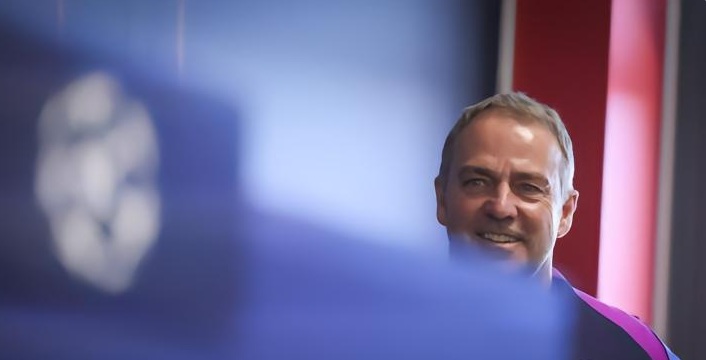
Flick's transfer strategy this summer outlines the blueprint for his third season at Barcelona, with one clear objective: a return to his trademark high-intensity pressing system.
To understand the roadmap that the 61-year-old German coach and sporting director Deco have drawn up, it is necessary to revisit the message Flick sent during the team's most difficult moments last season.
Since taking charge, Flick's greatest obsession has been implementing Gegenpressing—the German concept of immediate counter-pressing after losing possession. Whenever he sensed that his players had lost the determination and energy required to press aggressively, alarm bells began to ring. His philosophy is built on collective commitment, demanding that every player put the team ahead of individual ambition while maintaining relentless intensity. Success, however, often causes those habits to fade.
Barcelona have already enjoyed two consecutive seasons of winning trophies. Perhaps for that very reason, Flick is doubling down on returning to the foundations of his football ahead of his third campaign.
Only a few months ago, the focus was on strengthening the center-back and center-forward positions. At the time, names such as Alessandro Bastoni and Julián Álvarez dominated the conversation. Few could have imagined that by early July, the discussion would instead revolve around Anthony Gordon and Karim Adeyemi.
The pursuit of these two wingers points toward what could become the most aggressive version of Flick's Barcelona yet. Although they possess different playing styles, both share the qualities the German coach values above all else: exceptional pace, penetrating runs in behind, explosive transitions, and relentless defensive pressing.
At certain stages last season, many observers blamed Barcelona's defensive fragility on the back line. Flick, however, consistently pointed to the team's overall structure. In his view, improving the defense depends far more on reinforcing the foundations of his system—high pressing and pinning opponents inside their own half—than on simply signing another defender.
That philosophy explains why Flick ultimately abandoned plans to recruit a new defender. The decision was also influenced by Gerard Martín's impressive performances toward the end of last season, when Flick consistently trusted the partnership of Gerard and Pau.
Flick firmly believes that the way a team attacks ultimately determines how well it defends. If the forwards fail to initiate the press, the entire system becomes unsustainable.
That is also one of the main reasons Barcelona never seriously pursued Marcus Rashford. While the England international remains a formidable attacking weapon, his off-the-ball work rate and defensive commitment were considered insufficient for Flick's demanding system.
The interest in Anthony Gordon, by contrast, speaks for itself. Alongside Raphinha, he is arguably one of Europe's most relentless high-intensity runners, capable of repeatedly sprinting and pressing throughout a match.
Adeyemi also fits the profile perfectly, being another forward renowned for his aggressive pressing.
Should players like Gordon and Adeyemi arrive to complement the club's existing pressing specialists—including Raphinha, Ferran Torres, Fermín López and Gavi—the tactical identity Flick envisions for his third season becomes increasingly clear.
If Adeyemi's signing is completed, Flick would gain another attacker capable of operating across all three forward positions, although his preferred role remains on the right wing. His arrival would not only appear to signal the departure of Roony, but also suggest that Barcelona are preparing for the possibility of Raphinha leaving in the short or medium term.
While the club continues to dream of signing Julián Álvarez, Flick could soon have an attacking group featuring Lamine Yamal, Raphinha, Gordon, Adeyemi and Ferran Torres.
The arrivals of Gordon and Adeyemi also raise the intriguing possibility of Yamal eventually moving into a central role.
In a recent interview with El País, Yamal himself made his ambitions clear:
"The only position where you won't be marked by three defenders is in the middle. There is so much space there. As time goes by, I'll eventually play there because it's easy to defend me with three players on the wing, but in the middle they won't be able to stop me."
"In central areas, I can create one-on-one situations. Turning with the ball in the middle is much more decisive than doing it out wide. Right now, I'm more useful for the team on the wing. But one day, I'll be more decisive in the middle, and that's where I'll end up playing."
Barcelona still hope to bring in Julián Álvarez. However, with Flick potentially having such an abundance of wingers at his disposal, it is not impossible that the club could follow the blueprint established by Paris Saint-Germain—a fluid attacking model without a traditional No. 9, built around constant movement, positional rotation, and tactical fluidity.
Judging by his own words, Yamal already appears ready to embrace that challenge.