- Decimal Odds
- Hong Kong Odds
- Indonesian Odds
- American Odds
- Malay Odds
 English
- English
 Vietnam

Spain’s New Golden Generation: Why De la Fuente’s Team Looks Unstoppable Before World Cup Final


-
1
 Sheikh HammadWon 12/13Follow85.7%Win Rate +51.7%ROI 16Tips 1.89Avg Odds
 -
2
 Analysis VIP99Won 7/8Follow84.6%Win Rate +52.7%ROI 14Tips 1.85Avg Odds
 -
3
 JFollow80%Win Rate +39.1%ROI 10Tips 1.84Avg Odds
 -
4
 ApoorvWon 7/8Follow76.9%Win Rate +33.1%ROI 26Tips 1.90Avg Odds
 -
5
 Angela MurphyFollow76.4%Win Rate +33.3%ROI 62Tips 1.84Avg Odds
 -
6
 KUNMI》💙《Follow75%Win Rate +28%ROI 13Tips 1.85Avg Odds
Spain’s New Golden Generation: Why De la Fuente’s Team Looks Unstoppable Before World Cup Final
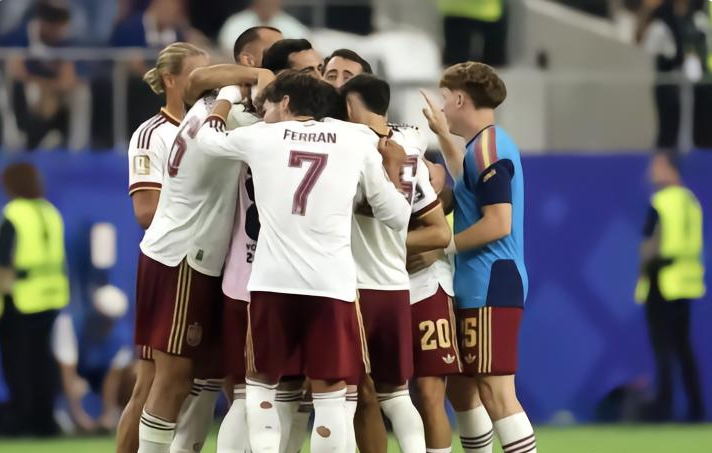
The Mexico-Canada-USA World Cup final is just around the corner. Ahead of the decisive clash, The Sun published a commentary article looking ahead to the highly anticipated showdown.
The Sun Commentary: Spain vs Cape Verde Feels Like a Lifetime Ago
Doesn’t that Spain match against Cape Verde feel like it happened in another lifetime?
Spain gave everything they had over 90 minutes, yet they simply could not break down the African side’s stubborn defence. They were forced to settle for a shocking 0-0 draw in their opening World Cup match, a result that raised plenty of eyebrows.
At the time, there did not appear to be much reason for concern. But, in fairness, Spain have grown stronger as the tournament has progressed. They have marched into the final with flawless performances, extending their unbeaten run to 37 matches, and produced what can arguably be described as one of the greatest World Cup performances in their history when they defeated France on Tuesday.
The reality is that this Spain team is no longer the same side that dominated European and world football from the late 2000s to the early 2010s.
That legendary generation was filled with superstars. Xavi, Andrés Iniesta and Sergio Busquets controlled the midfield, Fernando Torres was at his peak, while Sergio Ramos and Carles Puyol formed an almost impenetrable defensive wall.
It was a team packed with Real Madrid and Barcelona icons, representing the golden era of tiki-taka football. Their intricate passing combinations overwhelmed some of the strongest teams in the world. For four or five years, they were almost unstoppable.
But everything collapsed after Spain suffered a shock group-stage exit at the 2014 World Cup.
Since then, their revival has been quietly developing — but the foundations are completely different from before.
This new Spain emerged from the academy system, built around a group of relatively unfamiliar faces, and led by a manager who was an unexpected choice.
To be honest, when Luis de la Fuente took charge in 2022, very few people knew who he was.
After several low-profile coaching spells, including his time managing Athletic Bilbao’s reserve team, he was handed the Alavés job when the club were in Spain’s second division. However, he lasted just 11 games before being dismissed during the 2011-12 season.
At that point, he was almost the “Liz Truss” of football managers — his ideas were repeatedly rejected, nobody seemed willing to work with him, and he disappeared into the football wilderness for 18 months.
Then he saw an advertisement in a newspaper from the Spanish Football Federation looking for a coach and decided to apply. Weeks later, the federation finally responded and offered him the job.
It turned out to be a brilliant decision.
During his nine years working with Spain’s youth teams, many members of the current squad developed strong relationships under him and, as De la Fuente himself has said, became “a family”.
He had already become an essential figure within the federation. In many ways, he is Spain’s version of Lee Carsley — but with stylish glasses — someone who grew alongside these players and helped shape their development.
So it is hardly surprising that this team is so united, so dangerous and so difficult to deal with.
Simply trying to win the ball back from them is a huge challenge. And even when you finally manage to regain possession, they immediately press aggressively, suffocating opponents until they are forced to play the ball backwards.
Watching Spain is almost like watching Paris Saint-Germain at their best.
To implement such an effective style with a national team — a side that only comes together a handful of times each year — requires not only a brilliant coach, but also complete trust and commitment from every player.
Many traditional football powers, such as Germany, Brazil and the Netherlands, are currently struggling with questions about their identity.
Spain, however, are facing the opposite situation.
France have largely relied on their explosive attacking talent and have lacked a clear Plan B. England have faced similar issues.
As we saw against Argentina on Wednesday, much of their game plan revolved around giving the ball to Lionel Messi and allowing him to produce magic.
But if Carlsberg were to create a national team, it would probably look exactly like this Spain side.
The fact that Lamine Yamal has not enjoyed a spectacular World Cup does not matter. Spain have 100 other ways to beat you.
It is difficult to see anyone stopping them — not even Messi.
Brilliant, But It Is Time to Say Goodbye
In my opinion, this has been the best World Cup since the 2002 tournament in South Korea and Japan.
The group stage was slow at times, and the latter stages featured too many meaningless matches, but the number of goals and dramatic moments exceeded my expectations.
However, this tournament will also be remembered as the moment FIFA completely lost its credibility — or at least whatever remained of it.
The world has seen just how broken the organisation has become.
Now, football associations around the world need to show courage and remove the unbearable president Gianni Infantino at next year’s FIFA Congress.
A Familiar Feeling
The trust Thomas Tuchel had built among supporters and players has now suffered a major blow.
Against Argentina, with plenty of time still remaining, he followed Gareth Southgate’s approach and attempted to protect a narrow 1-0 lead rather than continue attacking.
That decision was simply unforgivable.
Tuchel insisted he had “no regrets” — but he should have been full of regret.
This was a golden opportunity to reach a World Cup final, and it was thrown away.
The question now is whether the Football Association regrets extending his contract before the tournament began — especially with a certain manager named Pep Guardiola currently available on the coaching market.