- Decimal Odds
- Hong Kong Odds
- Indonesian Odds
- American Odds
- Malay Odds
 English
- English
 Vietnam

TA: European Football Bodies Urge Authorities to Avoid Blanket Away Fan Bans


-
1
 SPORT249Won 10/10Follow100%Win Rate +60.1%ROI 10Tips 1.60Avg Odds
 -
2
 ConstanceWon 5/5Follow83.3%Win Rate +22.9%ROI 18Tips 1.52Avg Odds
 -
3
 collin_voraWon 7/8Follow80%Win Rate +40.6%ROI 15Tips 1.86Avg Odds
 -
4
 WolfRMFCWon 8/10Follow80%Win Rate +44.3%ROI 10Tips 1.93Avg Odds
 -
4
 Obertan4lifeWon 7/8Follow80%Win Rate +26.1%ROI 10Tips 1.55Avg Odds
 -
6
 Dirty Dirty DiamondWon 5/6Follow77.8%Win Rate +46.2%ROI 10Tips 1.87Avg Odds
TA: European Football Bodies Urge Authorities to Avoid Blanket Away Fan Bans
According to The Athletic, several of Europe’s leading football clubs, major leagues and national football associations have joined forces with Football Supporters Europe (FSE) in a joint initiative calling on public authorities to use a complete ban on away fans attending matches only as a “last resort.”
The agreement was reached at UEFA’s Safety and Security Conference in Madrid, where hundreds of professionals gathered this week to discuss the contribution of away supporters to European football and the challenges created by blanket bans on travelling fans.
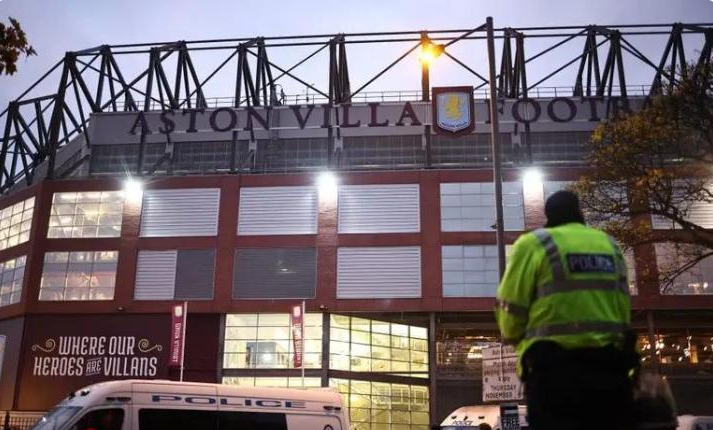
As the umbrella organisation representing supporter groups from 50 European countries, FSE has long campaigned against what it considers the excessive use of collective bans by authorities. One of the most high-profile cases occurred in November 2025, when Birmingham City Council and West Midlands Police banned Maccabi Tel Aviv supporters from travelling to watch their Europa League away match against Aston Villa.
The decision was strongly criticised at the time by then UK Prime Minister Sir Keir Starmer. West Midlands Police Chief Constable Craig Guildford later announced his early retirement and is currently facing a serious misconduct investigation over his recommendation to impose a complete ban on Israeli team supporters attending the match.
Although the incident attracted worldwide attention, it was far from an isolated case. In the second leg of the 2023 Europa Conference League semi-final, Basel supporters were prevented from travelling to Nice due to concerns from French authorities that domestic strikes could affect security arrangements, despite there having been no previous clashes between the two sets of fans. As a result, Basel supporters were forced to watch the match from a bar near the French-Swiss border.
In 2024, local authorities in Lyon imposed a collective ban on Besiktas supporters ahead of a Champions League fixture, citing fan violence that had occurred seven years earlier. Paris police also prevented PSV Eindhoven fans from attending their Champions League match against Paris Saint-Germain.
In 2025, France’s Interior Ministry attempted to close the French-Belgian border to stop Feyenoord supporters from travelling to Lille. Paris police also attempted to ban Bayern Munich fans from attending their match against Paris Saint-Germain, while authorities in Naples prohibited Eintracht Frankfurt supporters from travelling to an away fixture.
All of these cases, along with similar incidents, were heavily criticised by supporter organisations, who argued that such measures represented excessive reactions to potential security risks and often lacked accountability, due process and transparency.
These protests attracted the attention of the Council of Europe. Founded in 1949 to protect human rights and the rule of law across Europe, the organisation currently has 46 member states, including the United Kingdom.
In October 2025, its Committee on Safety and Security at Sports Events issued a non-binding recommendation to member states regarding collective bans on away supporters. The recommendation stated that national legislation on restrictions at sporting events “should prioritise individual accountability rather than collective restrictions, ensuring that sanctions are accurately targeted at those responsible for disorder.
It also stated that collective bans should “only be considered in exceptional circumstances and must be supported by clear, recent and objective evidence.” The recommendation added that decisions should be made following extensive consultation with relevant stakeholders and communicated to supporters as quickly as possible to avoid unnecessary travel and accommodation costs.
Following the conclusion of this week’s Madrid conference, UEFA, the European Club Association (ECA), European Leagues and Football Supporters Europe have jointly endorsed the Council of Europe’s recommendations. They called on public authorities across Europe to follow five key principles: prioritising individual accountability, using complete bans only in exceptional circumstances, ensuring football stakeholders are involved in decision-making, providing timely communication and promoting fairness.
In a joint statement, the four organisations said:
“Fans, including away supporters, are essential to creating the atmosphere, cultural identity, popularity and sporting integrity of football competitions at all levels.”
“Subject to compliance with applicable laws and regulations, following a team both at home and away is a right of supporters. It is a long-standing and highly valued tradition within European football culture.”
Football Supporters Europe added on social media: “Away fans belong in European football. Collective bans should not become a routine response to safety and security challenges.”
However, one important question remains: how UEFA itself will handle similar situations when it imposes disciplinary sanctions for supporter behaviour in European club competitions.
While this initiative is mainly focused on encouraging local councils, governments and police forces to take a more careful approach when making decisions, UEFA itself has also issued collective away-fan bans in the past. The most notable example came in 2023, when UEFA punished Legia Warsaw supporters with a five-match away ban following serious crowd trouble during their Europa Conference League match against Aston Villa.